BALI — Why is etomidate becoming a growing concern in Bali, and how can the substance be detected when it may be distributed in liquid form similar to electronic cigarette liquid?
The question has emerged after the Denpasar City National Narcotics Agency (BNN) revealed that it has handled four cases involving the circulation of etomidate in Bali.
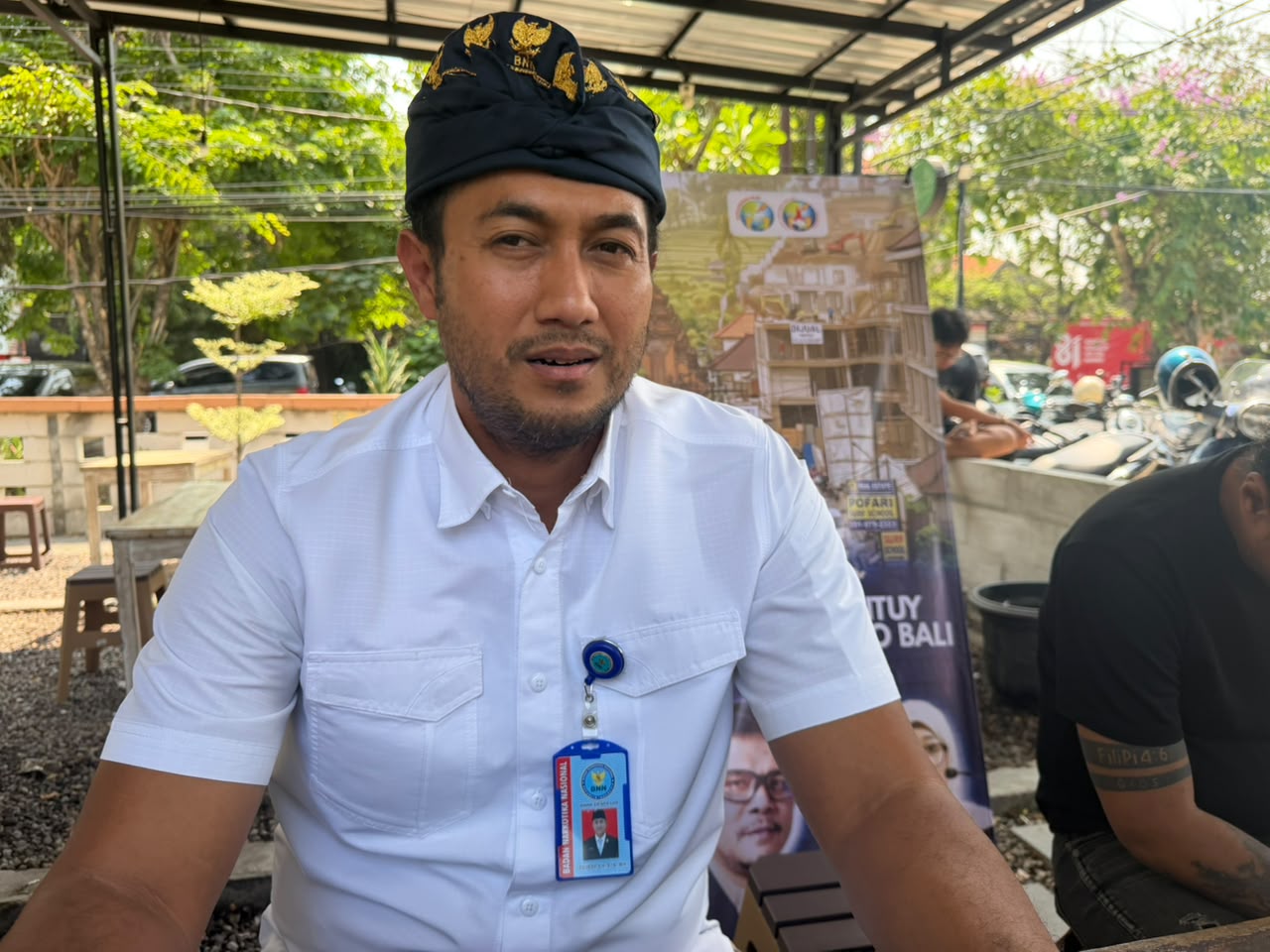
Head of BNN Denpasar, Kombes Pol Dr. Leo Dedy Defretes, S.H., S.I.K., M.H., disclosed the cases during a monthly discussion with the Ikatan Wartawan Online (IWO) Bali in the Renon area of Denpasar on Wednesday (September 30, 2026). According to Leo, etomidate is classified as a new psychoactive substance (NPS). The substance was previously used in the medical field as an anesthetic, but its illegal use and distribution have now become a serious concern.
“There have already been four cases handled in Bali,” Leo said.
Why Is Etomidate Difficult to Recognize? One of the main concerns surrounding etomidate is the way it can be presented in liquid form. Leo said the distribution of etomidate is increasingly following the trend of electronic cigarette use, creating new challenges for law enforcement, parents and schools.
Unlike narcotics that may appear in recognizable physical forms, liquid substances can be difficult to identify simply by looking at them.
“When it is in liquid form, it is very difficult to distinguish it with the naked eye. It has to undergo laboratory testing,” Leo explained.
This means that a liquid suspected of containing etomidate cannot be reliably identified based solely on its color, appearance or physical characteristics.
What Happens When Etomidate Is Misused? Leo said etomidate can produce effects including hallucinations. At certain levels of use, the substance can also cause a person to lose consciousness.
“The effects clearly include hallucinations. At certain levels of use, a person can suddenly collapse or faint. It is risky and damaging to health,” he said. Etomidate was included in Indonesia's Class II narcotics category in late 2025 through provisions issued by the Ministry of Health, following reports concerning its misuse. The development has added another challenge to efforts to prevent the circulation of new psychoactive substances, particularly among younger people.
How Is Etomidate Entering Bali? BNN Denpasar has found that some of the etomidate involved in cases handled in Bali entered the island through delivery services. BNN subsequently conducted monitoring and enforcement measures in accordance with applicable law, leading to the identification of individuals allegedly involved in the distribution network.
Leo said the substance is also relatively expensive. In the cases uncovered by BNN, the price of etomidate was around Rp5 million.
“The distribution is found among certain groups, particularly those with financial means. The price of etomidate in the cases we uncovered was around Rp5 million,” he said.
Which Areas in Denpasar Are Considered Vulnerable? The concern over etomidate comes amid BNN Denpasar's broader mapping of areas vulnerable to narcotics distribution.
Leo identified Pemogan Village and Pemecutan Klod Village as two areas classified as red zones based on BNN's narcotics vulnerability index.
“Based on the narcotics distribution vulnerability index, Pemogan Village is one of them. It is classified as a red zone. There is also Pemecutan Klod Village. The others are still categorized as vulnerable or on alert,” he said.
According to Leo, narcotics distribution in Denpasar largely targets people of productive age, from approximately 15–16 years old to people in their 40s.
“We see that consumption is highest among people of productive age. The segment is around that age range,” he said.
What Can Families and Communities Do? BNN Denpasar is strengthening prevention efforts through community-based intervention and public education.
The agency is also encouraging all 43 villages and urban villages in Denpasar to develop the Bersinar (Clean from Drugs) program.
Through Community-Based Intervention (IBM), residents are encouraged to become part of prevention efforts and develop the ability to identify potential narcotics threats in their own surroundings.
“How can the community protect itself and its environment? The community itself must carry out interventions based on the community,” Leo said.
BNN is also implementing the Sobat Bersinar program and the Anti-Narcotics Curriculum Integration (IKAN)initiative in schools to strengthen students' knowledge and resilience against drug abuse.
What Should Parents Watch For? Leo urged parents to pay attention to sudden changes in their children's physical condition or behavior.
He mentioned sudden shaking or tremors as one of the signs that should raise concern when there is a suspicion of substance use.
“If a child suddenly has seizures or starts shaking, parents need to be alert. This is what is known as ‘narkoba getar’,” he said.
However, Leo emphasized that parents and members of the public should not attempt to determine whether a liquid contains narcotics simply by looking at it.
“When it is in liquid form, it is very difficult to distinguish it with the naked eye. It must undergo laboratory testing,” he said.
BNN therefore advises the public not to examine suspected substances themselves or draw conclusions based solely on their appearance. Any suspected narcotics should instead be reported to the authorities for proper examination.
Can BNN Handle the Threat Alone? Leo stressed that preventing and combating narcotics requires cooperation across society.
Government institutions, schools, communities, families and other elements of society all have a role in preventing the spread of narcotics and strengthening public awareness.
“The fight against narcotics cannot be carried out by BNN alone. It must involve every element of society, including families,” Leo stressed.
For Leo, prevention is not limited to arresting dealers and traffickers. It also means strengthening individuals, particularly young people, so they can recognize risks before becoming victims.
“We have to build resilience within each individual. Parents should not wait until their children or family members have been exposed or become victims before they start paying attention,” he said.
He added that early prevention should help children recognize risks, resist persuasion, report suspected narcotics activity and have the courage to say no.
“The fight against narcotics is not only about arresting perpetrators, but also about preventing our children and the next generation from becoming victims,” Leo concluded.