
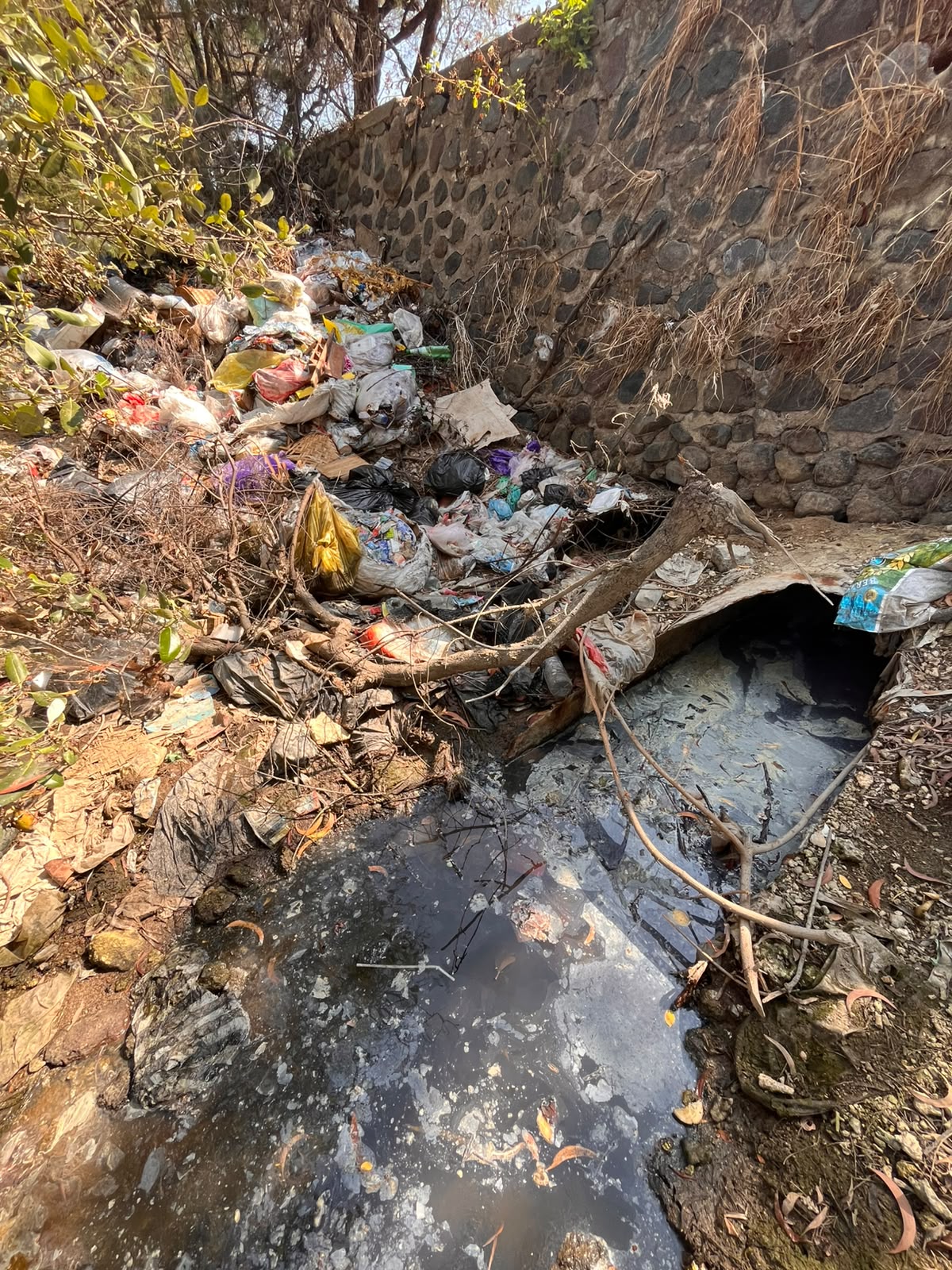
BALI – The mangrove conservation area along the coast of Serangan, South Denpasar, is facing a growing environmental concern as dark leachate is reportedly flowing from the Suwung Sarbagita Landfill into the surrounding mangrove ecosystem. Leachate is a liquid produced when water, including rainwater, passes through layers of waste and carries dissolved chemicals as well as organic and inorganic materials from the waste.
A field observation on Friday, September 18, 2026, found dark liquid flowing freely through a large drainage channel connected to the Suwung Landfill and leading toward the nearby mangrove conservation area.
The situation has raised concerns over the condition of the mangrove ecosystem within the Ngurah Rai Grand Forest Park, or Tahura Ngurah Rai, which covers approximately 1,373.5 hectares and plays an important role in protecting Bali’s coastline and supporting coastal biodiversity.
Environmental activist and Serangan resident Wayan Jecky said the most severe damage to the mangroves can already be seen with the naked eye.
According to Jecky, the condition of the mangroves cannot simply be attributed to weather conditions or strong winds.
He said waste sediment carried by the flow had formed layers of foul-smelling mud around the mangrove area. The sediment, he suspected, has covered the roots of mangrove trees and contributed to their deterioration and death.
Suwung Landfill Reopens for Organic Waste The environmental concern comes as the Suwung Landfill has once again been used to receive organic waste every Tuesday and Thursday. The measure is being implemented as an emergency response while Bali awaits the completion of the Waste-to-Energy project, locally known as Pengolahan Sampah Menjadi Energi Listrik (PSEL).
For Jecky, the situation requires immediate government intervention, particularly to address the flow of leachate before it causes further damage to the Tahura Ngurah Rai ecosystem and potentially affects marine life downstream.
“We are asking the relevant authorities to come to the field as soon as possible. A solution must be found, and in-depth research is needed to ensure that this leachate is no longer discharged into the Tahura mangrove area because the ecological impact could be very significant,” he said.
Solid Waste Adds to Pressure on Serangan’s Mangroves The problem in the downstream area of Serangan is not limited to leachate. Jecky said he has repeatedly found piles of solid waste scattered around the conservation area, with some of the waste blocking parts of the surrounding area. He said the situation highlights the need for a more comprehensive approach to waste management in Denpasar, rather than relying solely on waste-sorting efforts at the source.
According to Jecky, dealing with the waste burden around Suwung and Serangan cannot be left entirely to the government. Greater involvement from businesses and other stakeholders operating around the landfill and Serangan area is also needed.
“There needs to be strong collaboration and a serious effort from all parties. Private-sector companies such as BTID, as well as state-owned enterprises operating around the landfill, such as Pelindo and Pertamina, should also step in and help address Bali’s waste problem,” Jecky said.
The condition of the mangroves in Serangan has brought renewed attention to the environmental impact of waste management in Bali. Beyond addressing the visible waste, determining the quality and source of the leachate, controlling its flow, and assessing its impact on the surrounding ecosystem will be crucial to protecting the coastal environment.

