BALI – Imagine seeing the chief of Denpasar Police sitting on a roadside bench, chatting with local residents, enjoying a cup of coffee at a small food stall, or discussing everyday concerns with street chess players. No formal protocol, no security entourage, and no barriers between the police chief and the community.
This is the distinctive leadership style of Kombes Pol. I Wayan Winaya, Chief of Denpasar City Police (Kapolresta Denpasar), who believes that maintaining public security starts with listening directly to the people.
Born in Gianyar and raised in Sanur, Bali, Winaya has introduced a more approachable style of policing. His previous assignments, including service in Lombok and several regions across Java, have shaped his ability to connect with people from different backgrounds.
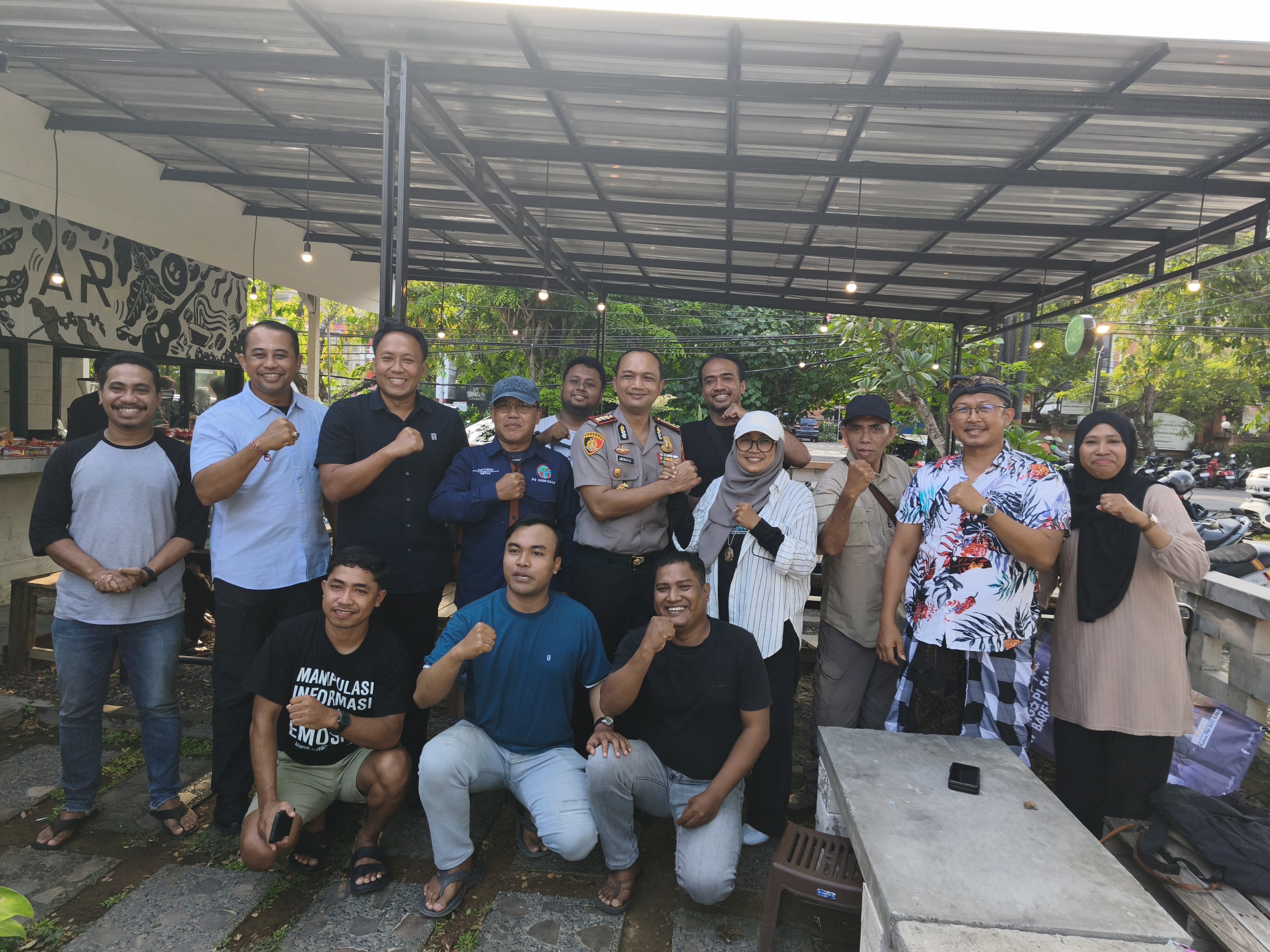
One of his recent informal encounters took place on Saturday afternoon, October 31, 2026, at a small coffee stall in the Renon area of Denpasar.
Winaya was seen sitting on a simple wooden bench, enjoying coffee and fried bananas while talking with members of the Bali chapter of the Indonesian Online Journalists Association (IWO Bali).
There were no formal ceremonies or official protocols. Only his driver and several police officers in civilian clothing accompanied him.
The conversation moved naturally from everyday issues to more serious discussions about public safety, tourism, and the future of security in Bali.
Public Security Begins by Listening to the Community
For Winaya, maintaining security and public order, commonly known in Indonesia as Kamtibmas, is a long-term investment that cannot be achieved through police operations alone.
He believes that Bali, particularly Denpasar, carries a significant responsibility as the gateway and international tourism showcase of the island.
"That is why I go directly to the grassroots level. I want to hear people's concerns firsthand, including those of drivers and tour guides. Wherever people gather, I try to come, talk, and listen to their aspirations," Winaya explained.
He emphasized that public security must become a shared responsibility involving residents, social communities, businesses, and law enforcement agencies.
Rather than relying solely on formal meetings and police reports, he wants officers to understand the actual conditions experienced by people in their daily lives.
From Roadside Coffee Shops to Late-Night Police Patrols
Winaya's approach is not limited to informal conversations.
He also plans to strengthen police visibility through direct patrols, particularly during hours when criminal activity and public safety concerns require greater attention.
According to him, Denpasar Police will conduct night patrols from 11 p.m. until 4 a.m. WITA (Central Indonesia Time).
Winaya said he intends to personally lead the patrols alongside other officers.
"We see that the community wants the police to be present. That is why we will conduct patrols from 11 at night until 4 in the morning," he said.
The patrol schedule is based on operational assessments by the Denpasar Police Operations Division, which identifies vulnerable locations and periods of increased public activity.
The objective is to provide a stronger sense of security for both residents and international visitors enjoying Denpasar's nightlife.
Why Security Matters for Bali's Tourism Reputation
As the capital of Bali Province, Denpasar plays an important role in supporting the island's tourism industry.
For international visitors, a sense of safety is an essential part of the travel experience. This makes public security a key factor in maintaining Bali's reputation as a world-class tourism destination.
Winaya also reminded the public and media outlets to assess criminal incidents proportionally.
He argued that a crime occurring in one particular location should not automatically lead to the conclusion that the entire city or island is unsafe.
"How significant is the impact of insecurity at one particular point compared with the wider area? That needs to be assessed. We should not generalize," he stressed.
He also referred to the widely publicized 2025 murder and mutilation case involving a Russian national as an example of how criminal incidents can attract international attention and influence perceptions of Bali.
According to Winaya, information about security conditions must be communicated accurately and proportionally so that residents, visitors, and prospective tourists can make informed assessments.
A More Accessible Police Leadership Style
What makes Winaya's approach different is his willingness to step outside the conventional image of a police chief.
Whether talking with drivers, tour guides, street vendors, chess players, journalists, or local residents, he believes that meaningful communication can happen anywhere.
His presence in small coffee shops and public spaces reflects an approach that places community engagement alongside traditional law enforcement duties.
For Denpasar, the challenge is not simply preventing crime but also building public trust and encouraging residents to participate in maintaining a safe environment.
Ultimately, Winaya's message is straightforward: public security cannot be created by the police alone. It must grow from the community, supported by consistent police presence, open communication, and shared responsibility.
For a tourism destination such as Bali, that partnership may be one of the most important investments in maintaining public safety and visitor confidence.