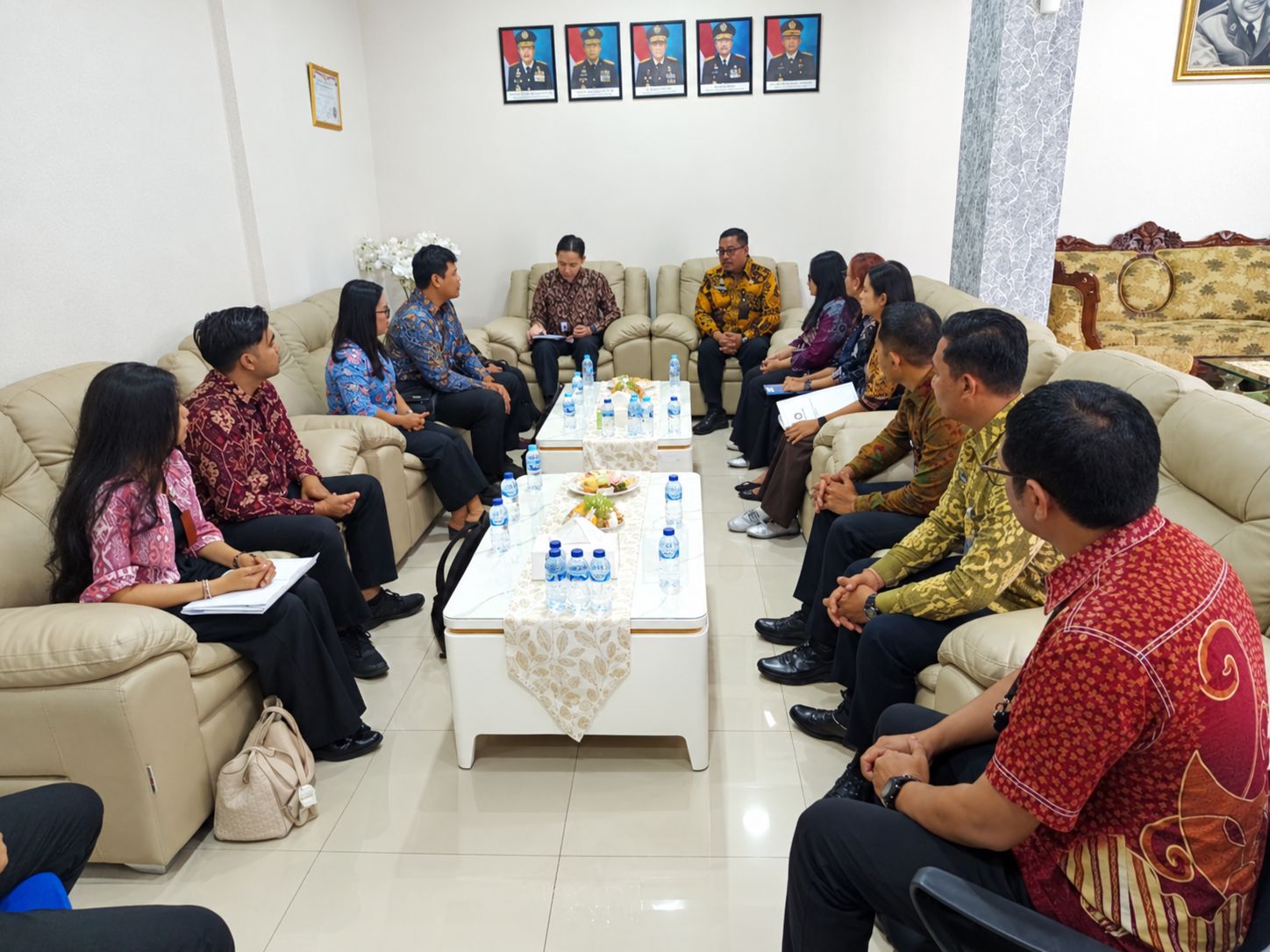
BALI — The Bali Representative Office of Indonesia’s Ombudsman has inspected Kerobokan Class IIA Correctional Facility and Gianyar Class IIB Detention Centre to assess whether public services meet established standards and protect the rights of inmates and their families.
The monitoring took place on Friday, October 23, 2026, focusing on service quality, transparency, and potential maladministration within the two correctional facilities in Bali.
For inmates and their families, the inspection addresses practical concerns, including access to visits, clarity of service procedures and fees, the fulfilment of inmates’ rights, and the availability of complaint mechanisms.
Ombudsman Reviews Five Key Areas of Correctional Services
During the inspection, the Ombudsman team reviewed documents and standard operating procedures (SOPs), interviewed correctional officers, inmates and their families or visitors, and observed facilities and service delivery in practice.
The assessment covered five key areas: accommodation management, visitation services, prevention and monitoring of illegal mobile phone use, extortion and narcotics (HALINAR), fulfilment of inmates’ rights, and complaint-handling services.
The review aims to identify gaps between written regulations and actual practices, while assessing whether internal oversight mechanisms are working effectively.
I Gede Febri Putra, head of the Bali Ombudsman monitoring team, said the inspection was intended to ensure that established public service standards were implemented consistently.
He added that correctional facilities must also have adequate infrastructure and sufficient personnel to deliver services in accordance with established standards.
Kerobokan Prison Faces Staffing Challenges as It Houses 1,964 Inmates
One of the key issues discussed during the inspection was the balance between the inmate population and available personnel at Kerobokan Class IIA Correctional Facility.
Head of Kerobokan Prison Tunggul Buwono reported that the facility houses 1,964 inmates and is supported by 140 staff members.
This situation presents challenges for inmate supervision, rehabilitation programmes and day-to-day operations, including efforts to maintain a humane approach to correctional services.
Tunggul emphasised the importance of building constructive relationships between officers and inmates as part of the rehabilitation process.
However, he said that a humane approach must go hand in hand with effective supervision and the proper exercise of authority under applicable regulations to prevent potential abuse of power.
The staffing situation highlights the importance of adequate resources and effective oversight in ensuring that correctional facilities can meet service standards while protecting inmates’ rights.
Gianyar Detention Centre Welcomes Public Service Monitoring
At Gianyar Class IIB Detention Centre, head Agus Setiawan welcomed the Bali Ombudsman’s visit and its assessment of public service standards.
The monitoring was expected to strengthen coordination between the Ombudsman and correctional service providers, while supporting ongoing improvements in service delivery.
For families visiting detained relatives, transparent procedures and accessible information are important elements of accountable public services.
Inspection Findings to Inform Further Evaluation
At the end of the visits, the Ombudsman team provided evaluations to the management of both facilities.
Findings from document reviews, interviews and on-site observations will be compiled into monitoring notes and submitted to the Ombudsman of the Republic of Indonesia for further consideration.
The results are expected to help identify service-related problems and determine the improvements needed at both facilities.
The Bali Ombudsman stressed that correctional public services must continue to be evaluated and improved through consistent implementation of service standards, effective internal supervision and accessible complaint channels.
These measures are essential to ensuring that inmates and their families receive transparent, accountable services and that inmates’ rights are protected in accordance with Indonesian law.