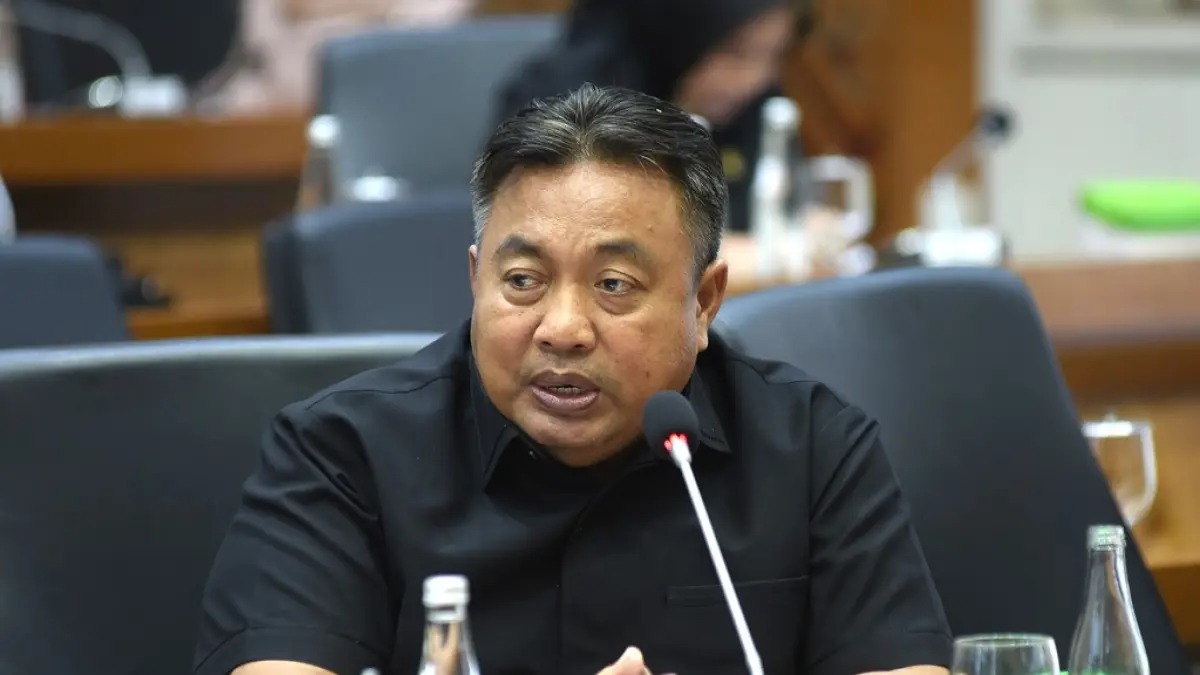
By: Nyoman Parta (Member of Commission III, House of Representatives of the Republic of Indonesia - DPR RI) Day after day, our public space is consumed by debates over educational credentials. National energy is drained by recurring polemics, while urgent real-world issues such as education, job creation, and the rising cost of living demand our attention.
As a representative of the people, I believe we can no longer remain silent. Following the Constitutional Court's examination of educational evidence and the Supreme Court's annulment of the equivalency letter, the DPR has a strong constitutional obligation to bring this matter to an official pathway through the Right of Opinion (Hak Menyatakan Pendapat or HMP).
Why We Proposed the Right of Opinion Exercising my constitutional right as a member of parliament under Article 20A paragraph (3) of the 1945 Constitution, and backed by Article 79 paragraph (4) letter c of the MD3 Law, I joined 120 members across eight factions on November 11, 2026, to formally submit an HMP proposal to the DPR leadership. This surpasses the minimum requirement of 25 proposers under Article 210 paragraph (1).
The rationale is simple: if the validity of the documents used to prove a vice presidential candidate's educational requirements has been legally challenged in two court rulings, the DPR must demand a transparent explanation. What documents did the General Election Commission (KPU) use during verification? On what basis was the equivalency letter issued? Where is the verifiable proof of graduation? These questions deserve official, accountable documentation.
The Thread Connecting the Constitutional Court and Supreme Court Rulings Our stance is anchored in legal facts established by Indonesia's highest judicial bodies:
1. Constitutional Court (MK) Decision No. 01/PHPU.PRES-XXIV/2026 (October 6, 2026): The Court stated that the proceedings found no convincing evidence—such as a foreign diploma, certificate, or degree—capable of serving as a valid basis for educational equivalency to senior high school. It noted that the certificate of attendance and supporting papers failed to prove the completion of the required education level. The MK emphasized that following up on these facts falls under the mandate of authorized constitutional institutions like the DPR.
2. Supreme Court (MA) Decision No. 742 K/TUN/2026 (October 30, 2026): The Supreme Court granted the cassation and declared null and void the Directorate General of Primary and Secondary Education Letter No. 9149/D.D1/KS/2019, obligating the defendant to revoke it due to a violation of the principle of thoroughness. Under the Administrative Procedure Law, an annulled administrative decision loses its binding force from its inception.
The Constitutional Path: DPR's Role Under Articles 7A and 7B Under Articles 7A and 7B of the 1945 Constitution, the mechanism is clearly defined: An HMP proposal must be approved by at least two-thirds of the members present in a plenary session attended by at least two-thirds of all DPR members. The Constitutional Court then examines the opinion.
If the constitutional grounds are proven, the DPR submits a proposal for dismissal to the People's Consultative Assembly (MPR), which will make a final decision after giving the Vice President a chance to be heard.
As a member of Commission III overseeing legal affairs, I urge the DPR to summon the KPU to clarify the candidate verification process, ask the ministry to explain the issuance of the now-annulled equivalency letter, and provide space for Gibran to present counter-evidence.
We have spent too much time arguing in public opinion vacuums. Now is the time for the DPR to answer the core question: With what evidence were these educational requirements fulfilled, and how does the state account for its verification after the equivalency letter was struck down?