BALI — Amid growing social media discussions and complaints suggesting that Hindu religious ceremonies can be complicated and financially burdensome, the Parisada Hindu Dharma Indonesia (PHDI) Denpasar City is offering a practical solution through a mass Manusa Yadnya ceremony.
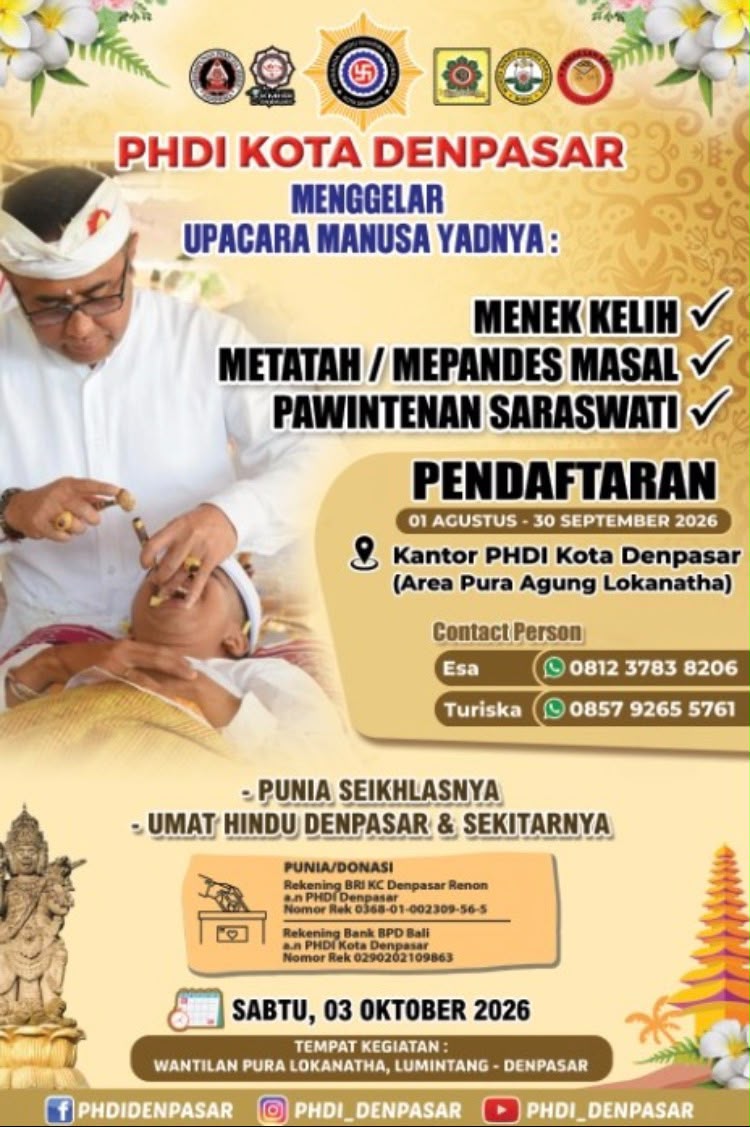
PHDI Denpasar City will organize a joint Menek Kelih, Pewintenan Saraswati, and Metatah ceremony as part of its efforts to provide religious services that are simpler, more accessible, and less burdensome for Hindu families in Denpasar and surrounding areas.
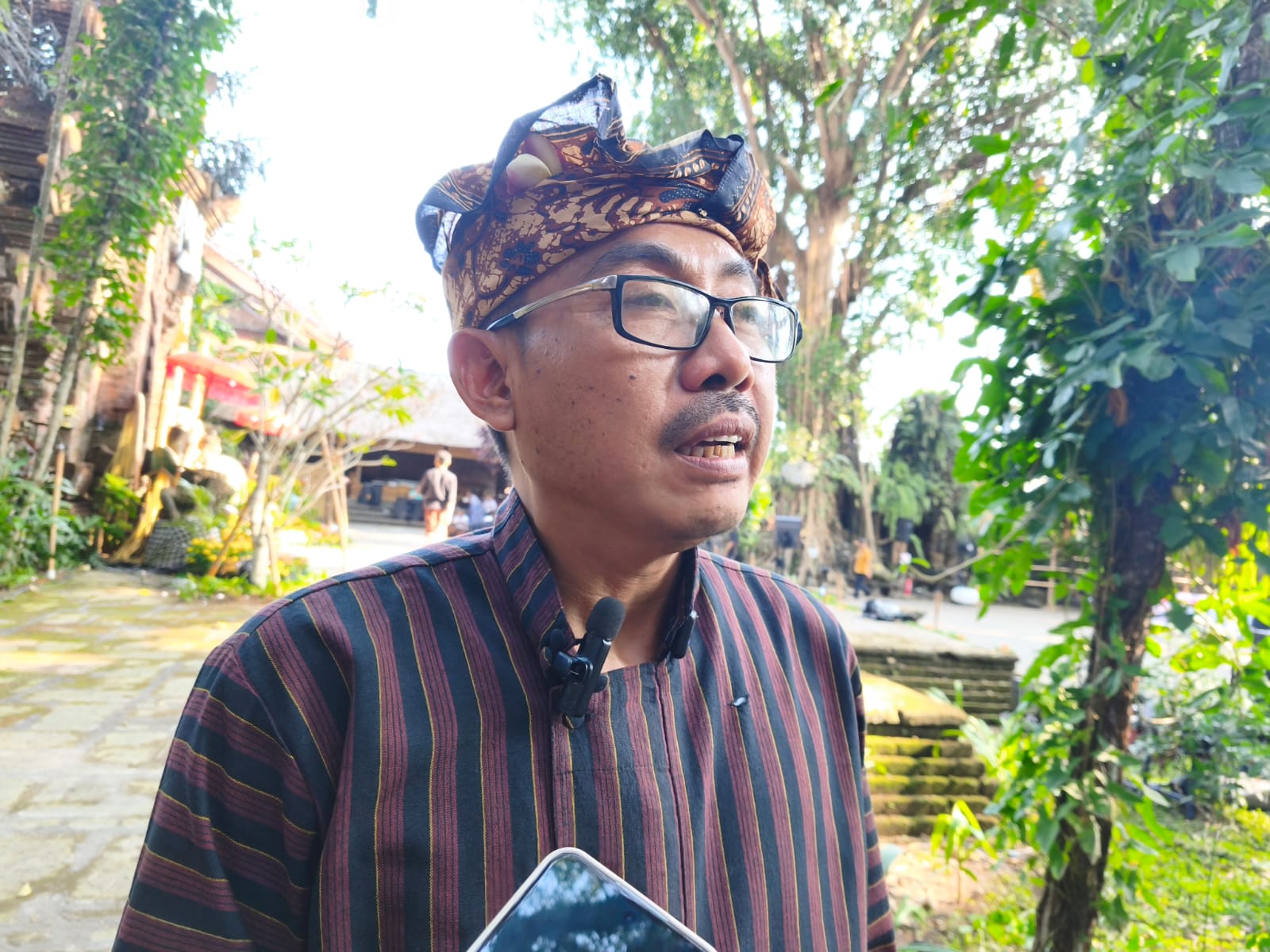
Chairman of PHDI Denpasar City, Dr. I Made Arka, S.Pd., M.Pd., said the program is also intended to respond to the perception that Hindu religious ceremonies are complicated and expensive.
“The perception that yadnya in Hinduism is complicated and burdensome is something we answer through this joint Manusa Yadnya ceremony,” Made Arka said while speaking to the media on Wednesday (Sept. 16, 2026), during a preparation meeting at the PHDI Denpasar City office in Taman Kota Lumintang, Denpasar.
According to Made Arka, the joint ceremony is designed to help Hindu families fulfill important stages of Manusa Yadnya, particularly ceremonies related to children.
“The Menek Kelih, Pewintenan Saraswati and Mass Metatah ceremonies are being held as an effort to ease the burden on Hindu families in fulfilling their obligations toward their children,” he said.
He emphasized that conducting the ceremonies collectively reflects the spirit of mutual cooperation, or gotong royong, as well as the Hindu principle of Vasudhaiva Kutumbhakam, which emphasizes the idea that the world is one family.
The joint ceremony is also expected to challenge the perception that Hindu religious ceremonies must be expensive and complicated.
“With the spirit of mutual cooperation, devotees can participate in this Manusa Yadnya ceremony more easily and without unnecessary complications,” Made Arka said.
One of the key aspects of the program is the flexible contribution system. The amount of punia, or voluntary religious offering, is left to the willingness and financial ability of each participant.
Made Arka explained that punia is essentially an expression of devotion and an offering to ancestors through the continuation of family traditions and religious obligations.
“The amount should be adjusted according to each person's ability,” he said.
The organizers also hope that a cross-subsidy system can emerge, allowing devotees who are financially capable of contributing more to help those who have fewer resources.
The initiative is therefore not only aimed at reducing the financial burden but also strengthening solidarity among Hindu communities.
The joint Manusa Yadnya is also intended to provide a solution for Hindu residents who live in Denpasar but do not belong to a traditional desa adat community in Bali.
This includes migrants and transmigrant families who may face difficulties organizing certain traditional ceremonies because they are not registered as members of a customary village community.
PHDI Denpasar is also opening opportunities for members of the public and the private sector to support the program through donations and sponsorships.
The organizing committee itself, Made Arka said, is also contributing collectively to support the implementation of the ceremony and provide services to devotees.
Meanwhile, Chairman of the organizing committee, Dr. AA Ngurah Agung Wira Bima Wikrama, ST., M.Si., encouraged participants to wear simple prayer attire consisting of white-and-yellow madya clothing.
The dress code, he explained, is intended to promote togetherness and simplicity during the ceremony.
“The clothing guidelines are part of an effort to emphasize togetherness and simplicity, so that the essence of the yadnya can be carried out solemnly and with devotion,” said Wira Bima, who is familiarly known as Danis.
All technical information regarding the ceremony will be delivered to registered participants during a technical meeting before the event.
Participants will also be added to a WhatsApp group to facilitate coordination and communication between the committee and devotees.
The religious ceremony will involve pinandita from various soroh or pasemetonan communities in Bali.
The involvement of religious leaders from different community backgrounds is expected to add a sense of sacredness while reflecting the diversity of Balinese Hindu society.
The organizers are inviting Hindu devotees in Denpasar and surrounding areas to take part in the joint ceremony.
The Mass Manusa Yadnya is scheduled to take place at Wantilan Pura Lokananta, Denpasar, on Saturday, October 3, 2026.
For registration and further information, participants can contact: Tu Riska: +62 857-9265-5761 Esa: +62 857-9266-5761