BALI — A legal expert from Indonesia’s Press Council has emphasized that disputes arising from journalistic publications should first be resolved through the Press Council mechanism before being pursued through civil or criminal proceedings.
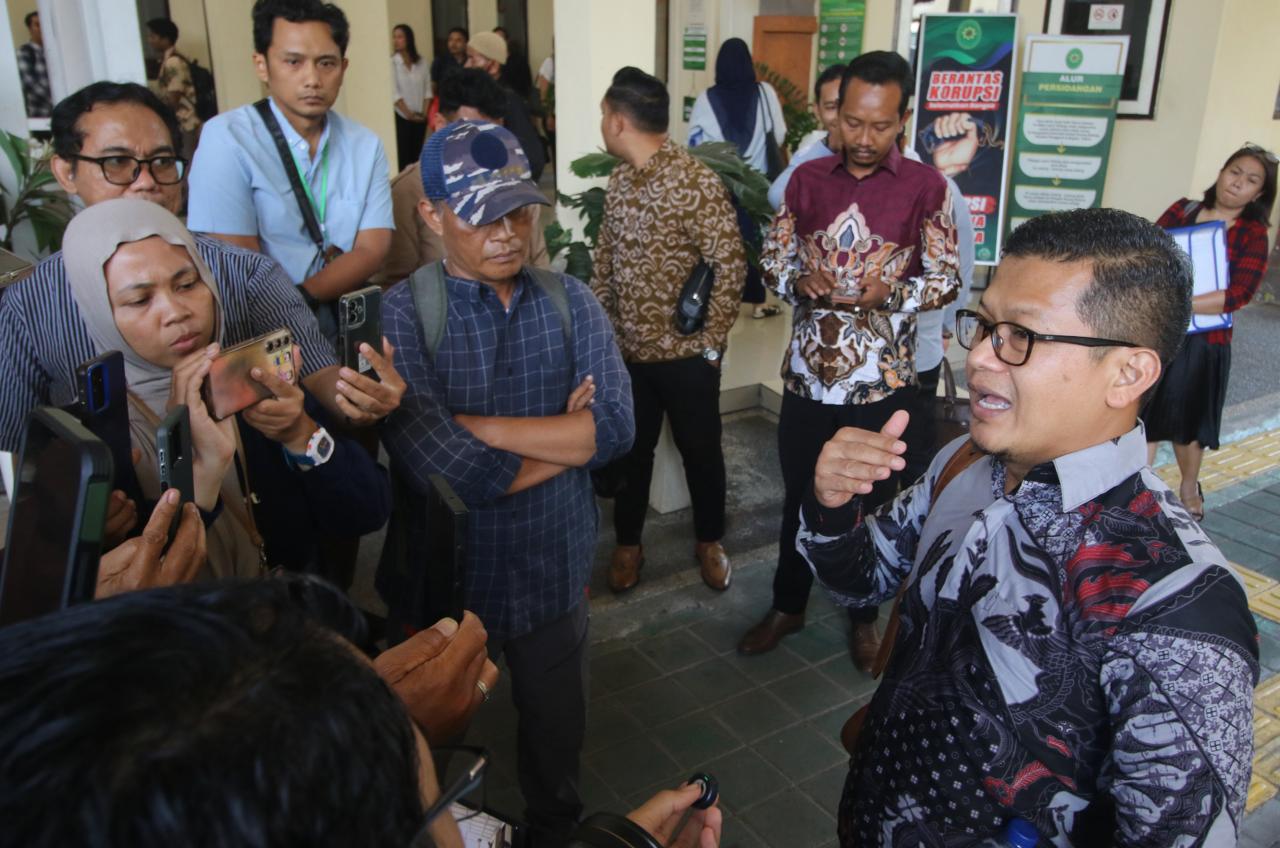
The statement was delivered by Hendrayana, S.H., M.H., a press law expert and legal and regulatory adviser to the Dewan Pers (Press Council), during a civil lawsuit hearing at the Denpasar District Court in Bali on Monday, October 5, 2026.
The lawsuit, valued at IDR 25 billion, was filed by lawyer Togar Situmorang against four media companies in Bali.
The hearing was held in the Sari courtroom and presided over by a panel of judges consisting of Abang Marthen Bunga, S.H., M.Hum., as chief judge, with Yudi Eka Putra, S.H., M.H., and Theodora Usfunan, S.H., M.H., as associate judges.
Press Disputes and the Principle of Lex Specialis
During the hearing, the defendants submitted documentary evidence, including jurisprudence from other cases involving similar press disputes.
They also presented Hendrayana as an expert witness to explain the legal framework governing journalistic disputes in Indonesia.
Hendrayana explained the principle of lex specialis derogat legi generali, under which a specific legal framework takes precedence over general legal provisions.
According to him, disputes arising from journalistic work should be handled first under Law No. 40 of 1999 on the Press, including the dispute-resolution mechanism involving the Press Council.
Journalist's Confirmation Effort Remains Relevant
Hendrayana also addressed the journalistic process, particularly the obligation of journalists to seek confirmation from parties mentioned in a news report.
He said that when journalists have attempted to obtain confirmation but received no response, the effort should still be considered part of the journalistic process.
"If confirmation has been attempted but there is no response, the journalist has carried out the ethical principle," he said.
According to Hendrayana, the assessment of a journalistic dispute should consider compliance with the Journalistic Code of Ethics, including verification, balance, the presumption of innocence and the accuracy of the substance of the report.
He said the journalistic process should be assessed as a whole rather than solely based on whether the person concerned ultimately responded to a request for confirmation.
Right of Reply and the Role of the Press Council
Hendrayana further explained the position of the right of reply in press disputes.
If a media organization has published a right of reply but the complainant remains dissatisfied, the issue can be brought back to the Press Council for further assessment, he said.
"The court is not the primary forum for assessing the effectiveness or compliance of a right of reply that is still within the ethical mediation process," Hendrayana said.
He also explained that recommendations issued through the Press Council mechanism generally have a timeframe for implementation, which he estimated at between one and three months, depending on the case.
Press Law Does Not Provide Criminal Immunity
At the same time, Hendrayana stressed that the special legal framework governing the press does not provide personal immunity to journalists from criminal law.
The protection under the Press Law applies to journalistic activities. Acts that fall outside journalistic work, such as extortion, drug-related offenses or other criminal acts, can still be handled under criminal law.
"Non-journalistic cases such as extortion, drugs and other criminal offenses can be directly processed under criminal law," he said.
Hendrayana also referred to several judicial decisions involving press disputes, including cases involving Tempo and a mass lawsuit against 25 media organizations in Palembang.
He said decisions at the district court, appellate court and Supreme Court levels have demonstrated the importance of following the appropriate dispute-resolution procedure in press-related cases.
Lawyers Question Press Dispute Mechanism
Hendrayana's testimony was followed by questions from both sides involved in the lawsuit.
Lawyers representing the four media companies, who are part of the Solidarity of Bali Journalists (SJB) legal team, including Ignatius Rhadite Prastika Bhagaskara and Indra Prasetya, questioned the expert about the legal mechanism for handling press disputes.
The panel of judges also asked about the timeframe for media organizations to implement recommendations issued by the Press Council.
Meanwhile, Togar Situmorang's legal team asked about the Press Council's position when a journalistic publication allegedly causes material losses.
Hendrayana reiterated that the Press Council's role is to assess complaints concerning alleged violations of journalistic ethics and to issue recommendations or sanctions in accordance with the applicable press dispute-resolution mechanism.
The IDR 25 billion civil lawsuit remains under examination at the Denpasar District Court, with the proceedings continuing through the evidentiary stage.