BALI – Workers and student representatives have urged Bali Governor Wayan Koster to use his discretionary authority to set the province’s 2027 minimum wage based on the estimated decent living needs (Kebutuhan Hidup Layak/KHL) of IDR 5.2 million per month. However, the provincial government’s preliminary simulation puts next year’s Provincial Minimum Wage (UMP) at approximately IDR 3.45 million.
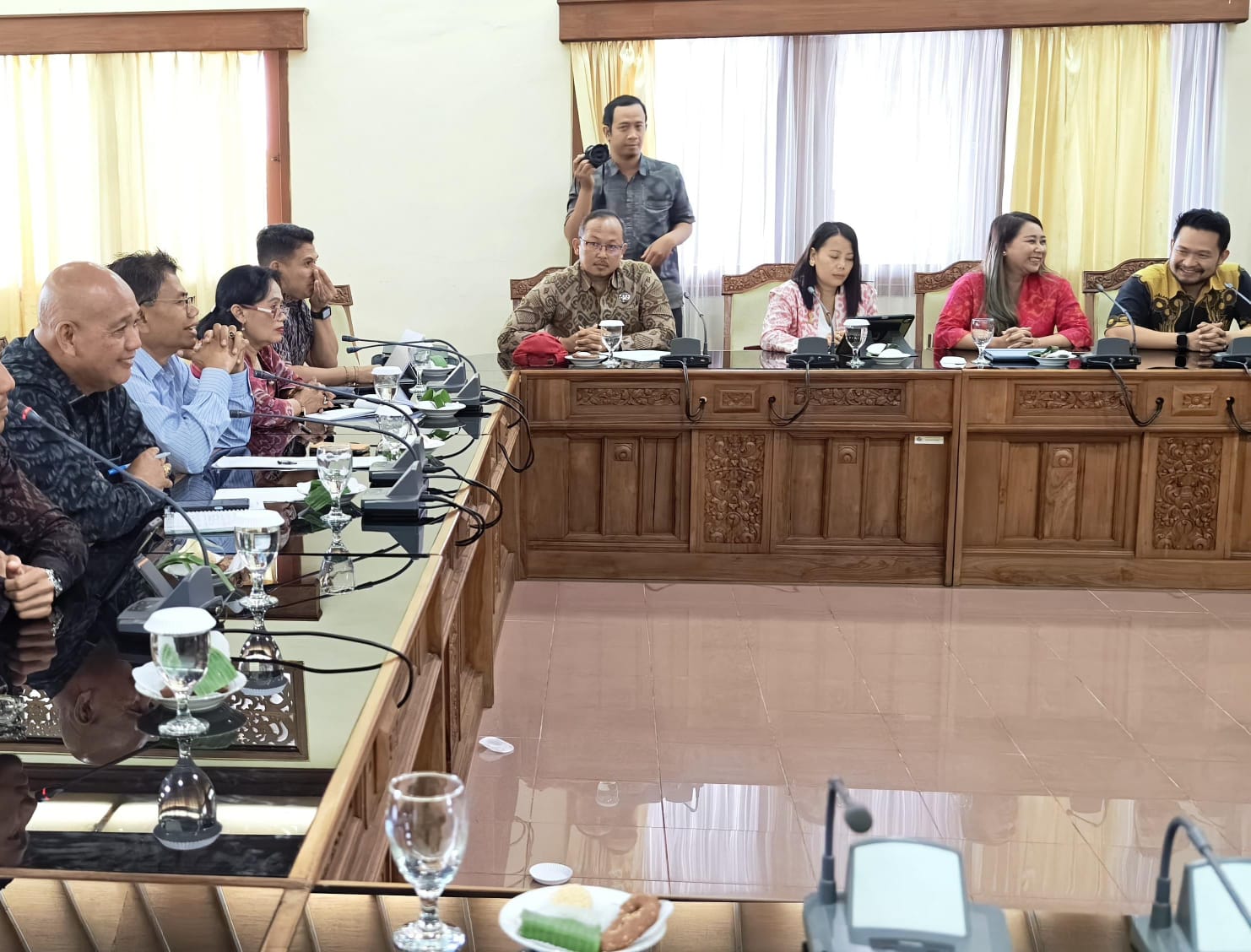
The demand was raised during a meeting between Koster and representatives of workers and students at the Bali Governor’s Office in Denpasar on Wednesday, October 21, 2026.
The representatives argued that the existing wage-setting formula does not adequately cover the cost of living for workers in Bali. They called on the provincial government to consider the KHL as a key reference when determining the 2027 minimum wage.
Those attending the meeting included I Made Dewa Rai Budi Darsana, Secretary of the Independent Workers Federation (Federasi Serikat Pekerja Mandiri/FSPM), protest coordinator Excel Bagaskara, and two student representatives.
Rai Budi Darsana said the 2027 minimum wage should reflect Bali’s estimated decent living needs of IDR 5.2 million per month. He argued that the government has room to consider workers’ living costs when determining wage policy.
He cited Constitutional Court Decision No. 168 of 2025 as one of the legal references supporting their demand.
Rai estimated that applying the wage-setting formula under Government Regulation No. 49 of 2025 would result in an increase of only around IDR 200,000.
With Bali’s current provincial minimum wage at approximately IDR 3.2 million, such an increase would bring the 2027 figure to around IDR 3.4 million—still substantially below the estimated IDR 5.2 million needed for a decent standard of living.
“Our decent living needs are valued at IDR 5.2 million. Once again, please listen to our cries,” he said.
Rai stressed that workers’ demands extend beyond meeting basic daily expenses. Workers in Bali also have responsibilities related to maintaining local customs and cultural traditions, which require additional financial resources.
He urged Koster to take decisive action to improve workers’ welfare.
“He must have the courage to raise wages in Bali. This is his discretionary authority,” Rai said.
Addressing concerns that higher wages could place additional pressure on micro, small, and medium-sized enterprises (MSMEs), Rai said wages for MSME workers are not determined solely by the provincial minimum wage. Agreements between employers and employees also play a role.
He added that a minimum benchmark of 50 percent of living costs should be considered.
Protest coordinator Excel Bagaskara argued that Bali’s economic growth and worker productivity, which he said have consistently exceeded national averages, have not translated into wages that adequately meet living costs.
He also pointed to Bali’s investment structure, claiming that foreign direct investment accounts for around 70 percent of total investment.
According to Excel, the island’s economic growth and investment performance should translate into better welfare for local workers.
“This means that workers in Bali are not benefiting from that economic growth,” he said.
Excel explained that the current wage-setting formula considers economic growth, inflation, and a specific index. Based on his calculations, using the highest index value would generate a wage increase of only around IDR 200,000.
He therefore urged the provincial government to consider using its discretionary authority to make decent living needs a reference for setting the 2027 minimum wage.
He also cited Government Regulation No. 49 of 2025 and considerations in the Constitutional Court ruling, which he believes provide room for the government to take workers’ living costs into account.
Responding to the demands, Governor Wayan Koster said he would review Constitutional Court Decision No. 168 of 2025 and the provisions of Government Regulation No. 49 of 2025, including the possibility of using decent living needs as a consideration in setting the minimum wage.
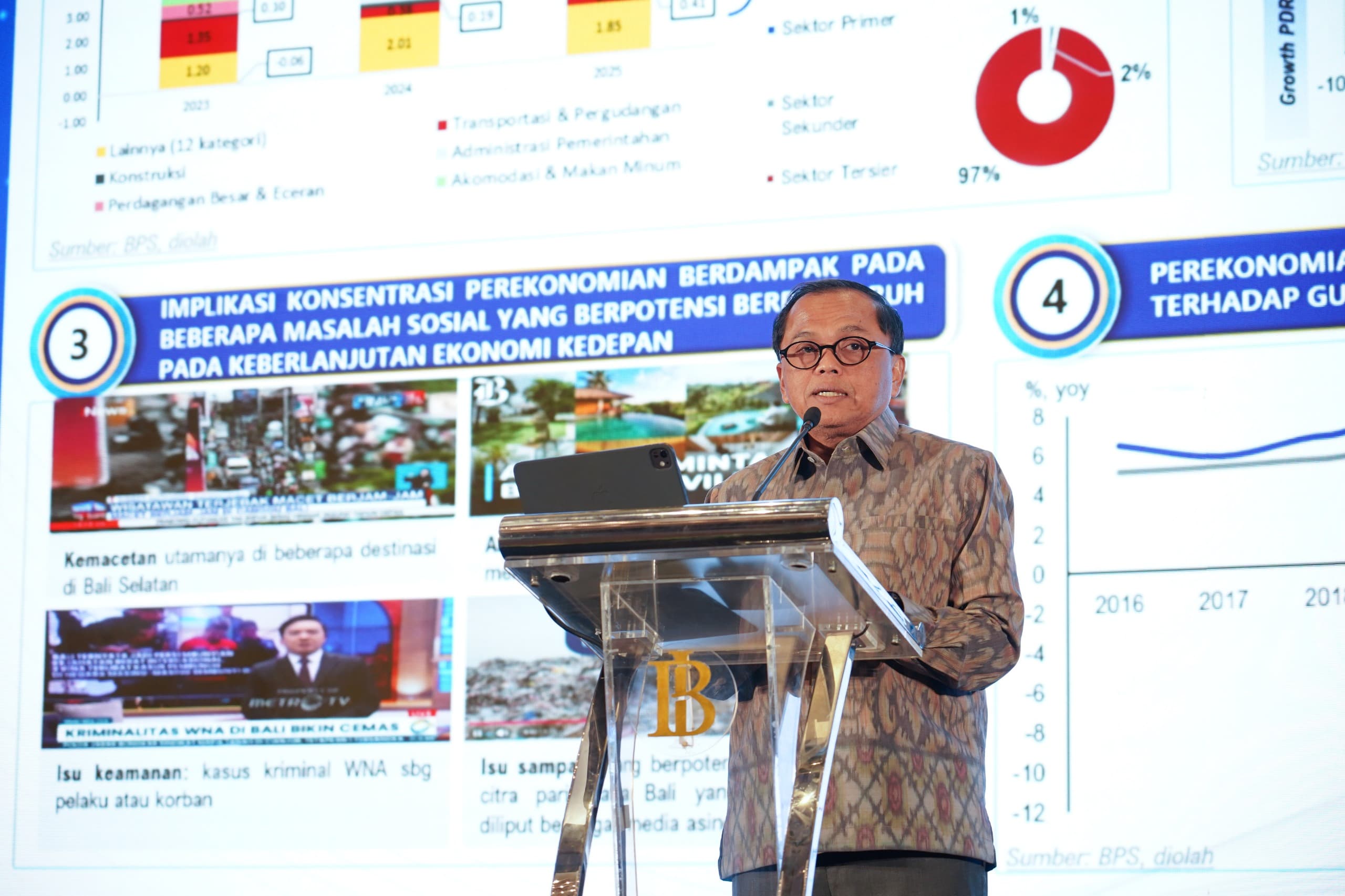
Koster revealed that he had instructed Bali’s Regional Research and Innovation Agency (BRIDA) to study the proposed 2027 provincial minimum wage. The assessment will also cover regency and municipal minimum wages, as well as sectoral minimum wages.
While awaiting the study, the provincial government has conducted a preliminary wage simulation using the highest alpha coefficient of 0.9 under the applicable formula.
The simulation estimates Bali’s 2027 provincial minimum wage at IDR 3.45 million, an increase of approximately 7.6 percent from the previous year.
Despite the projected increase, Koster acknowledged that the figure remained relatively low. He said wage policy must balance workers’ demands with companies’ ability to absorb higher labor costs without placing excessive pressure on businesses.
According to Koster, rising labor costs could increase production expenses and subsequently affect the prices of goods and services.
He said the wage increase should therefore be discussed through a tripartite mechanism involving the government, employers, and workers.
“In principle, the provincial minimum wage can be increased further. However, if IDR 5.2 million becomes the benchmark, I think many companies would close. If many companies close, workers will lose their jobs. So, this needs to be carefully considered,” Koster said
Koster said BRIDA’s findings would serve as the basis for further discussions with the Wage Council and other relevant stakeholders before the 2027 minimum wage is determined.
He stressed that the process should accommodate workers’ aspirations while protecting business sustainability and employment opportunities across Bali.
“I will use this as material for discussion so that a meeting can be held with the Wage Council and other relevant parties to establish a reference for determining the wage level,” he said.
The final amount of Bali’s 2027 provincial minimum wage has yet to be determined and remains subject to further study and consultation.
While workers and students are pushing for a wage closer to the IDR 5.2 million decent-living benchmark, the provincial government is weighing the demand against businesses’ financial capacity and the need to safeguard jobs.